
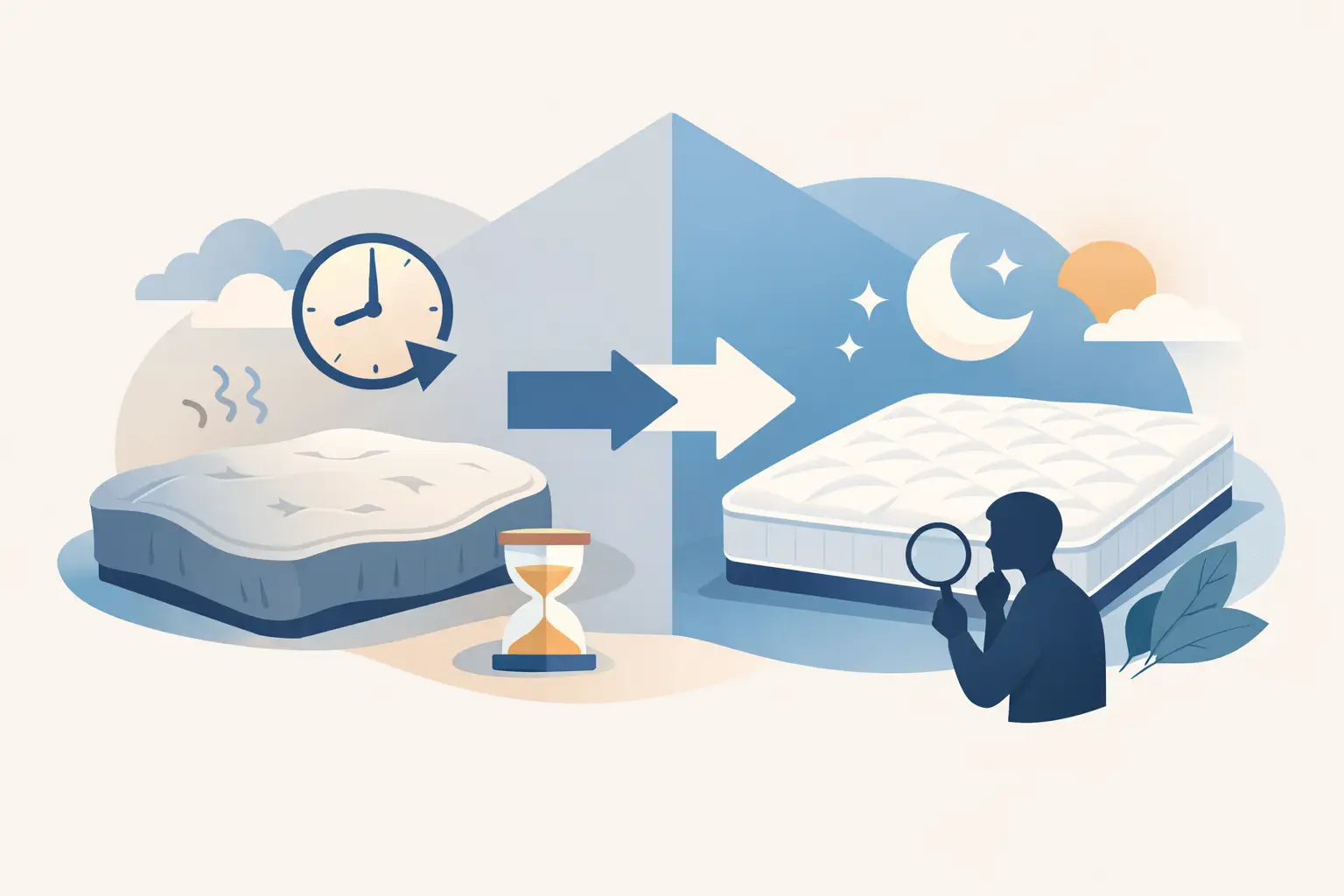
When Should You Replace a Mattress?
You usually do not notice a mattress going bad all at once. It happens a little at a time. You start waking up stiff, sleeping closer to the edge, or feeling that one spot in the middle that was not there a year ago. If you are asking when should you replace a mattress, the real answer is simple – replace it when it stops supporting your body, protecting your sleep, or giving you a good value for what you are living with every night.
For most households, a mattress is not something you replace on a fixed schedule just because a calendar says so. Age matters, but performance matters more. A well-made mattress that still feels supportive may last longer than expected, while a cheaper or heavily used mattress can wear out sooner. The goal is not to stretch it as long as possible. The goal is to stop paying for bad sleep with your back, your energy, and your mornings.
When should you replace a mattress based on age?
A lot of people hear the eight-year rule, and that is a decent starting point. Many mattresses last around seven to ten years, depending on construction, body weight, how often the bed is used, and whether it has been protected from moisture and wear. But that range is not a guarantee.
An innerspring mattress may start losing support sooner if the coils weaken or the comfort layers flatten. Memory foam can last well, but lower-density foam may develop body impressions faster than people expect. Hybrid models often hold up nicely, but they still depend on the quality of both the coil system and the foam on top. Guest room mattresses can last longer because they see less use, while a main bedroom mattress used every night by two adults may wear out faster.
That is why age should be treated like a warning light, not a hard rule. Once your mattress gets into that seven-to-ten-year window, it is smart to pay closer attention to how it feels and how you sleep on it.
The clearest signs your mattress needs replacing
The biggest sign is simple: you are not sleeping well on it anymore. If you wake up sore and feel better after moving around for a few minutes, your mattress may no longer be doing its job. A mattress should help your body recover overnight, not leave you stiff in the morning.
Visible sagging is another major red flag. If the surface dips where you sleep, especially in the middle or along one side, support has likely broken down. Some people try to rotate the mattress and buy more time, and that can help in certain cases, but once the core support is gone, rotation will not fix it.
Noise can also be a clue. Squeaking coils, creaking movement, or a generally unstable feel usually means the internal structure is wearing out. That does not always mean immediate replacement, but it often means the mattress is on borrowed time.
Heat retention can become more noticeable too. Materials break down, covers wear thin, and the bed may stop feeling as comfortable as it once did. If you are tossing covers off all night on a mattress that used to sleep cooler, that change matters.
Allergies are another overlooked sign. Over time, mattresses can collect dust, dander, and other irritants, especially if they were never used with a quality protector. If your mattress is older and you are waking up congested, sneezing more at night, or noticing a musty smell, replacement may make more sense than trying to rescue a worn-out bed.
When should you replace a mattress if it still looks fine?
This is where people get stuck. A mattress can look okay and still be worn out. The top fabric may be clean, the shape may seem mostly normal, and there may be no dramatic sagging. But if the comfort layers have softened unevenly or the support core has lost resilience, you will feel it before you always see it.
One common test is this: do you sleep better somewhere else? If your back feels better in a hotel, on a newer guest bed, or even on your couch for a night, your mattress may be the issue. Another clue is whether you keep changing sleep positions trying to get comfortable. A good mattress should not require constant adjustment.
Couples often notice this first. If one person feels the other rolling toward the middle, or if movement wakes both sleepers more than it used to, the mattress may have lost stability. A bed that still looks presentable in the showroom sense can still be worn out where it counts.
Your body can tell you before your eyes do
Pain does not always come from the mattress, but mattresses can definitely make existing pain worse. If you have shoulder pressure, lower back soreness, hip pain, or numbness in your arms, poor support may be part of the problem. That is especially true if the discomfort improves after a few hours out of bed.
Body changes matter too. If your weight has changed significantly, if you are recovering from an injury, or if you simply need a different comfort level than you did years ago, the mattress that once worked for you may not work anymore. There is no prize for staying loyal to a mattress that no longer fits your needs.
This comes up a lot with side sleepers and couples. Side sleepers often need better pressure relief as foam layers age. Couples may need stronger edge support or better motion control than an older mattress can provide. Parents replacing a child or teen mattress may also find that growth changes support needs faster than expected.
It depends on the type of mattress and how you use it
There is no one-size-fits-all answer because mattress life depends on real-world use. A mattress in a master bedroom used every night wears differently than one in a spare room. A sleeper over 230 pounds will usually put more stress on materials than a lighter sleeper. Kids jumping on the bed, an unsupported frame, and years without a protector can all shorten lifespan.
The mattress foundation matters more than people think. If the base is weak, slatted too far apart, or damaged, even a good mattress can start to fail early. In some cases, people think they need a new mattress when the real issue is the support system underneath. In other cases, both need replacement.
This is why buying the cheapest option just to get through another year can backfire. Value is not the same as low price. A mattress is a better value when it gives you the right support, lasts as expected, and helps you sleep better without overspending on branding and markup.
Should you repair it, rotate it, or replace it?
If the mattress is fairly new and only feels uneven, rotating it may help if the model is designed for rotation. Adding a protector if you never used one before can help preserve the next mattress, but it will not revive an old one. A topper can sometimes improve surface comfort for a short time, especially if the mattress is too firm.
But if the mattress is sagging, causing pain, or clearly breaking down, a topper is usually a temporary patch. It can make a bad mattress feel softer, but it cannot restore support that has already failed. If the issue is deep wear, replacement is the more honest fix.
How to know it is worth shopping now
If you are comparing the cost of a new mattress to the cost of keeping the old one, think beyond the receipt. Bad sleep affects energy, focus, mood, and comfort every single day. When an old mattress is disrupting sleep or leaving you sore, waiting too long often costs more than people realize.
The good news is that replacing a mattress does not have to mean paying inflated retail prices. For practical shoppers, the smartest move is to focus on support, comfort, and real value instead of showroom hype. That means trying the mattress, asking direct questions, and looking for quality options at a price that makes sense for your home and budget.
At Greenville Mattress Company, that is exactly how many local shoppers make the switch without overpaying. Whether you are replacing the bed in your primary bedroom, setting up a guest room, or furnishing a rental, the right time to replace your mattress is when your current one stops helping you sleep well. If you wake up feeling like your bed has given all it has to give, trust that signal and start looking for something better.