
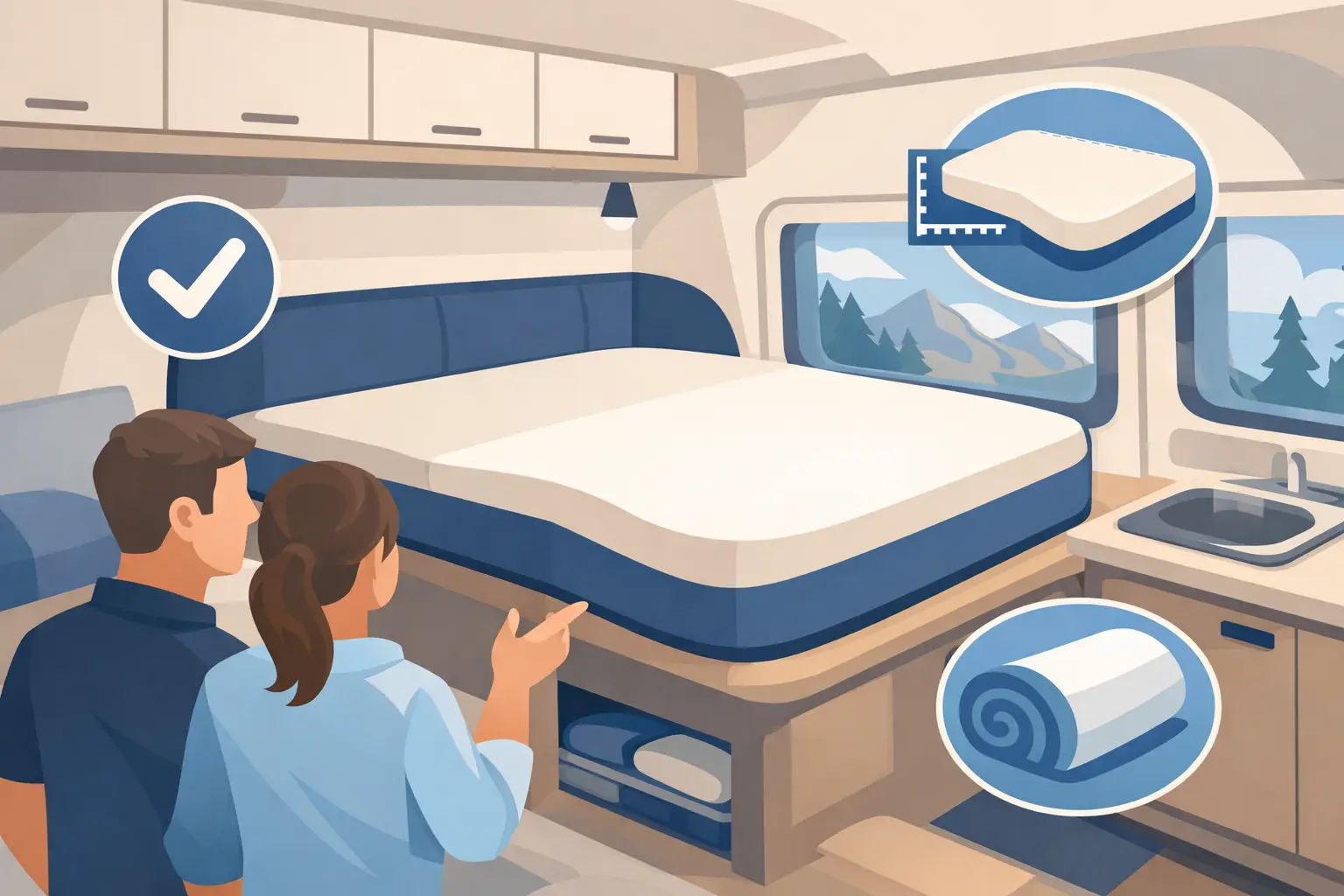
Custom Camper Mattress Example for a Better Fit
A camper bed can look close enough to a standard mattress size until you try to make the mattress fit. Then you find the wheel well cutout, the rounded corner, the narrow aisle, or the platform that is two inches shorter than any mattress sold in a box. This custom camper mattress example shows why measuring the actual sleep space matters more than guessing based on a label like “queen” or “full.”
A better-fitting camper mattress can make a weekend at the lake, a cross-country trip, or a long stay at the campground feel far more comfortable. It also keeps you from paying for a mattress that has to be bent, trimmed, or returned because it does not belong in the space.
A Real-World Custom Camper Mattress Example
Picture a travel trailer with a rear bedroom and a so-called RV queen bed. The platform measures 60 inches wide by 74 inches long. A regular queen mattress measures 60 by 80 inches, so it is six inches too long before you even consider the corners.
The bed sits against the rear wall, and the entry side has one rounded front corner to make room for a cabinet door. The owner also needs to lift the mattress regularly to reach under-bed storage. A standard queen will block the cabinet, overhang the platform, and make the storage lid heavier to use.
The right order is a custom 60-by-74-inch mattress with one rounded corner, made at a practical profile height that does not interfere with windows or overhead cabinets. That is not a luxury upgrade for the sake of it. It is a solution to a bed that was built differently than a bedroom at home.
The comfort choice depends on how the camper is used. For occasional weekends, a medium-feel foam mattress may provide good pressure relief at a sensible price. For longer trips, a supportive innerspring or hybrid-style build may be worth considering, especially for sleepers who dislike the feeling of sinking too deeply into foam. There is no single “best” camper mattress. The best one is the one that fits the platform, works with the available headroom, and feels right for the people using it.
Measure the Platform, Not the Old Mattress
An old RV mattress is often a poor measuring tool. It may be compressed, misshapen, or slightly smaller than the platform because it was made to slide in during factory assembly. Start with the wood or metal base instead.
Measure the widest point, the longest point, and the depth from the top of the platform to any obstacle above it. Take measurements in inches and write them down. If the platform has a curved edge, corner cutout, or tapered side, measure those details separately. A quick paper sketch with the width, length, and unusual areas marked is usually enough to prevent a costly order mistake.
Check access, too. Even a correctly sized mattress has to get through the camper door and around tight interior turns. In many RVs, a flexible foam mattress is easier to move than a heavy traditional mattress. That convenience is a real advantage, but it should be balanced against the support and feel you prefer.
Account for Corners, Curves, and Tapers
A camper bed is not always a rectangle. Some platforms narrow toward the foot, have a clipped corner beside a bathroom door, or curve around cabinets. These details matter because even a small mismatch can keep a mattress from lying flat.
For a rounded corner, measure from each straight edge to where the curve begins. For a tapered bed, measure the width at the head, middle, and foot. Photos of the platform can also help a mattress professional understand what the measurements mean. Do not assume a fitted sheet will hide a poor fit. A mattress that bows or bunches will be uncomfortable every night.
Choose the Right Height for Your Camper
Mattress thickness is one of the easiest details to overlook. At home, a taller mattress may look inviting. In a camper, it can cover a window, crowd an overhead bunk, make it harder to sit up, or prevent a storage compartment from opening correctly.
A lower-profile mattress can be a smart choice for cabover beds, pop-up campers, bunks, and tight travel trailer bedrooms. It preserves valuable clearance without forcing you to sleep on a thin, worn-out cushion. A taller mattress may work well on an open platform where storage access and overhead space are not concerns.
Before choosing thickness, measure from the platform to the lowest cabinet, shelf, or ceiling point above the bed. Also consider how far you need to step up to get into bed. The right height should feel comfortable, not like a daily obstacle.
Comfort Still Counts on the Road
A custom size fixes the fit, but it should not force you to settle for poor sleep. Start with your usual sleeping position. Side sleepers often need more pressure relief around the shoulders and hips. Back sleepers usually want a balanced medium feel that keeps the midsection supported. Stomach sleepers often prefer a firmer surface that helps prevent their hips from dipping too far.
Temperature can also affect the decision. Campers can get warm quickly, particularly in the summer when the air conditioner is working hard. Some all-foam mattresses hold more warmth than people expect. A breathable cover, a more responsive foam construction, or an innerspring option may feel better for warm sleepers.
Weight is another camper-specific trade-off. Every pound matters more in a travel trailer or motorhome than it does in a spare bedroom. A heavier mattress may deliver a familiar feel, but it can add to the load and be harder to lift for storage access. Ask about the weight before making a final choice, especially if you are replacing a thin factory mattress with something substantially thicker or denser.
Common Mistakes That Cost More Later
The most common error is ordering a standard mattress because the platform is “almost” a standard size. Almost is not enough in a small RV. A mattress that is two inches too wide can buckle along the wall. One that is too long can block a door or leave you with an awkward bend at the foot of the bed.
Another mistake is buying based on price alone. Value matters, especially when furnishing a camper, but the cheapest option is not a bargain if it wears out quickly or leaves you sore after every trip. Look for a new mattress with a construction and comfort level that match how often you travel.
Finally, do not forget bedding. An odd-sized camper mattress may need custom sheets, deep-pocket sheets, or sheets sized for the nearest standard option. Plan for that expense before ordering. It is much easier to enjoy your new bed when you already know how it will be covered and protected.
Get Local Help Before You Order
Custom measurements can feel intimidating, but you do not have to sort it out alone. Bring your platform measurements, a simple sketch, and a few photos when you shop. A local mattress store can help you compare practical options without pushing you into a one-size-fits-all model that was never meant for your RV.
At Greenville Mattress Company, shoppers can ask straightforward questions about custom sizes, mattress feel, and price without the inflated showroom runaround. If you are replacing a camper mattress, the goal is simple: get a comfortable new bed that fits the first time and leaves more room in the budget for the trip itself.
Before your next getaway, take ten extra minutes to measure the camper bed carefully. Those numbers can turn a frustrating replacement project into the kind of upgrade you notice every morning on the road.