
Best Mattress for Side Sleepers That Fits You
Your shoulder should not be the price you pay for a good night’s sleep. If you wake up with a numb arm, a sore hip, or stiffness that fades only after you get moving, your mattress may be working against the way you sleep. The best mattress for side sleepers balances pressure relief at the shoulder and hip with enough support to keep your spine from sagging overnight.
That sounds simple, but “soft” is not automatically the answer. A mattress that feels plush for five minutes can let your midsection sink too far after several hours. The right choice depends on your body size, sleep habits, and whether you share the bed. Here is what to look for before you buy.
What Side Sleepers Need From a Mattress
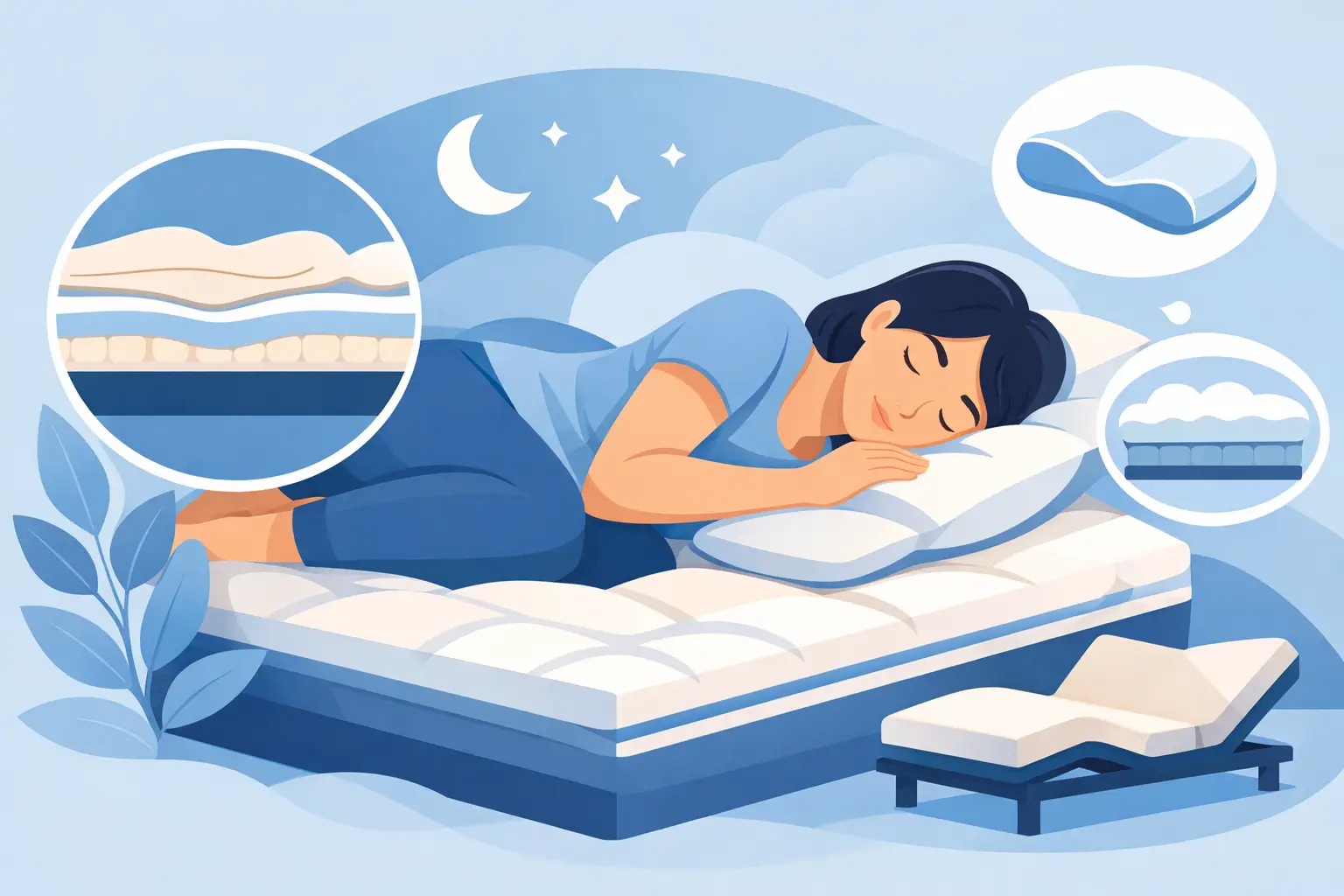
Side sleeping puts more concentrated pressure on the body than back sleeping. Your shoulder and outer hip carry much of your weight, while the space at your waist needs support. When the mattress is too firm, those pressure points take the hit. When it is too soft, your hips can dip below the rest of your body and pull your spine out of alignment.
For most shoppers, medium to medium-plush is the practical starting point. This range gives the shoulder room to settle in while maintaining enough support underneath the hips and lower back. That said, firmness labels are not standardized. One company’s medium can feel like another company’s firm, which is why lying on the mattress matters more than trusting the label alone.
A quality side-sleeper mattress should do three jobs well: cushion pressure points, support the body evenly, and hold its shape night after night. It should also work with a pillow that fills the space between your head and shoulder. Even an excellent mattress can feel wrong with a pillow that is too flat or too high.
Best Mattress for Side Sleepers: Start With Firmness
A medium or medium-plush mattress is often the sweet spot, especially for average-weight side sleepers. It provides a gentler top surface without turning the whole bed into a sinkhole.
Lighter sleepers may prefer a softer feel because they do not press as deeply into comfort layers. If you are under roughly 130 pounds and a medium mattress still feels hard at the shoulder, a plush option can make more sense. Heavier side sleepers usually need a medium-firm mattress with substantial support underneath. The top should relieve pressure, but the core needs to prevent the hips from dropping too low.
Body shape matters as much as body weight. A person with broader shoulders or curvier hips may need more contouring than someone with a straighter build. Couples also need to account for two different comfort preferences. If one person prefers a firmer surface, a medium mattress with a pressure-relieving comfort layer is often a better compromise than going very soft.
Choose the Mattress Type That Matches Your Priorities
There is no single construction that wins for every side sleeper. The best value comes from choosing the features you actually need instead of paying for a long list of showroom buzzwords.
Memory Foam for Pressure Relief
Memory foam is popular with side sleepers because it contours closely around the shoulder and hip. It can be a strong choice for people who wake up sore or who feel every movement from a partner. Foam also tends to offer good motion isolation, which helps when one sleeper gets up early or changes positions often.
The trade-off is heat and slower response. Some foam mattresses use cooling covers or more breathable materials, but no mattress should be bought on a cooling claim alone. If you sleep hot, pay attention to how the bed feels after you have been lying on it for several minutes. Also consider whether you like the feeling of sleeping “in” a mattress rather than more on top of it.
Hybrid Mattresses for Balanced Comfort
A hybrid combines foam comfort layers with a coil support system. For many side sleepers, this is the easiest category to shop because it can deliver cushioning without losing the steady support and easier movement that coils provide.
Hybrids are especially worth considering for couples, larger sleepers, and anyone who wants pressure relief but does not like the slow-sinking feel of traditional memory foam. Pocketed coils can also reduce motion transfer compared with older connected-coil designs. Not every hybrid is automatically better, though. The thickness and quality of the comfort layers still determine whether it actually relieves pressure at the shoulder.
Traditional Innerspring for a Firmer, More Budget-Friendly Feel
An innerspring mattress can be a good buy when it has enough padding on top and a supportive coil system below. These mattresses are often easier to move on and can sleep cooler than dense foam. They also tend to offer excellent value for guest rooms, rental properties, kids’ rooms, and shoppers replacing an old mattress on a practical budget.
For a dedicated side sleeper, avoid a thin, extra-firm innerspring unless you know you enjoy a very firm surface. A pillow top or euro top can add needed cushioning. The key is not simply buying the softest top available. You want comfort layers that relieve pressure without masking weak support.
Do Not Ignore Edge Support and Motion Transfer
Side sleepers often curl up near an edge, especially when sharing a queen or full-size bed. Weak edge support can make a mattress feel smaller than it is and make getting in and out of bed less comfortable. Sit near the edge when you test a mattress. If it collapses too easily, it may not be the right fit for daily use.
Motion transfer matters for couples. Memory foam generally isolates movement best, while hybrids with individually wrapped coils can offer a good middle ground. If your partner tosses, turns, or gets up before the alarm, test the mattress together whenever possible. A mattress can feel great for one person and still be a poor choice for the household.
How to Test a Mattress in the Store
A quick sit on the edge does not tell you much. Wear comfortable clothes, lie down in your normal side-sleeping position, and give the mattress at least 10 minutes. Your shoulder should settle without feeling jammed upward, and your hips should feel supported rather than swallowed.
Pay attention to your lower back. If you feel a gap at the waist with no support, or if your hips feel lower than your shoulders, try a different firmness or construction. Ask someone with you to look at your posture from behind. Your spine should appear reasonably straight, not bowed or bent.
If you are shopping as a couple, test it as a couple. Take turns changing positions and notice whether the other person feels the movement. It is much easier to have an honest conversation in the showroom than to discover the problem after delivery.
Get Value Without Buying Too Cheap
A mattress is a major purchase, but expensive does not always mean better for your sleep. National chains often build large marketing costs and high overhead into their pricing. Closeout, discontinued, and factory-outlet inventory can give shoppers access to brand-new mattresses at far better prices, provided the mattress is the right comfort and support level for them.
At Greenville Mattress Company, shoppers can compare brand-new mattress sets and find closeout value without the pressure of paying traditional retail markup. A lower price should not mean settling for an uncomfortable bed. It should mean you can put your money toward the size, support, and features that matter to your household.
Be careful with a bargain that has no real support or is already showing wear. A mattress that sags early is not a deal, no matter how low the starting price was. Ask about the mattress construction, the condition of the product, available delivery, and the foundation or frame needed to support it properly. A good mattress also needs a stable base. Slats that are too far apart or an old broken foundation can shorten its useful life.
A Better Night Starts With the Right Feel
The best choice is the mattress that lets your shoulder relax, keeps your hips supported, and fits your budget without making you second-guess the purchase. Start around medium to medium-plush, compare foam, hybrid, and padded innerspring options, and spend enough time lying down to notice how your body responds. When you wake up without negotiating with your hip or shoulder, you will know the mattress is doing its job.