
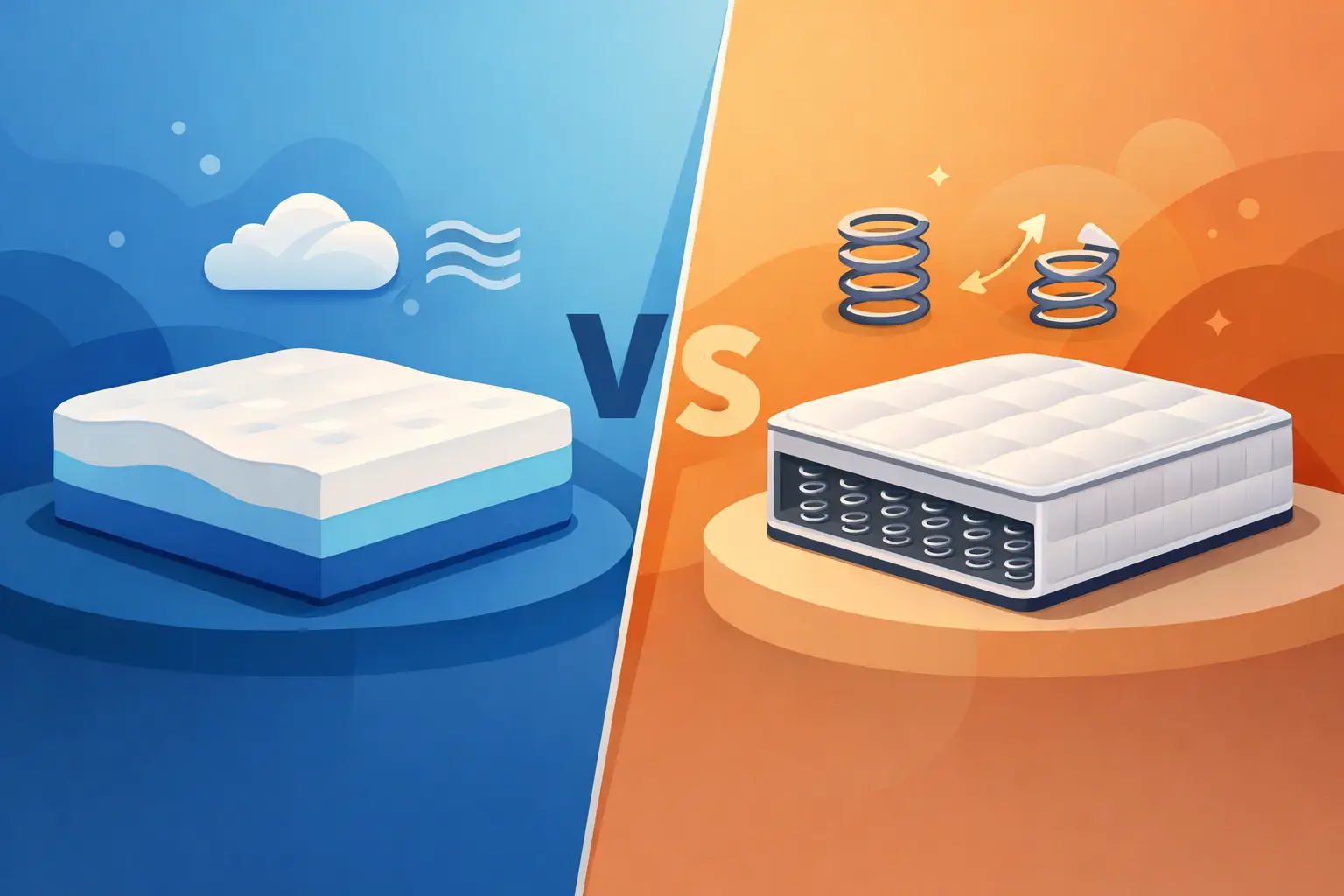
Foam vs Innerspring Mattress: Which Wins?
You usually feel the difference between these two mattress types in the first 30 seconds. One hugs your body and softens pressure points. The other feels springier, more lifted, and easier to move around on. When shoppers ask about foam vs innerspring mattress options, they are really asking a practical question: which one will help me sleep better without wasting money?
That answer depends on how you sleep, how warm you run at night, how long your current mattress has been bothering your back, and what kind of value you want from your purchase. If you are shopping smart, the goal is not to buy the trendiest mattress. It is to buy the right mattress for your body, your budget, and your home.
Foam vs innerspring mattress: the real difference
A foam mattress is built with foam comfort layers and, in most cases, a foam support core. Depending on the model, that can include memory foam, high-density polyurethane foam, or gel-infused foam. The feel is usually more contouring. It responds to your weight by cushioning your shoulders, hips, and lower back.
An innerspring mattress uses a coil system as its main support structure. On top of those coils, you will usually have layers of padding or upholstery foam, but the main feel comes from the springs underneath. Innerspring beds tend to feel more responsive, more supportive on the surface, and less body-hugging.
Neither one is automatically better. A lot of national advertising makes mattress shopping sound simpler than it is. The truth is that both foam and innerspring models can be comfortable, supportive, and affordable if you choose the right build quality and firmness.
Comfort feels different from one sleeper to the next
Foam tends to appeal to people who want pressure relief. If you sleep on your side, or if your shoulders and hips get sore during the night, foam often does a better job of spreading out body weight. That can make the mattress feel gentler and more cushioned, especially for lighter and average-weight sleepers.
Innerspring tends to appeal to people who like a more traditional mattress feel. If you want to sleep on the mattress instead of in it, coils usually deliver that. Many back sleepers and stomach sleepers prefer the flatter, more lifted feel because it can help keep the midsection from sinking too far.
This is where firmness matters just as much as material. A soft innerspring and a firm foam mattress can feel more different than shoppers expect. That is why a simple label never tells the whole story. The real question is how the full mattress is built.
Who usually prefers foam
Foam is often a strong fit for side sleepers, people with joint pressure, and couples who are bothered by movement from the other side of the bed. Memory foam especially absorbs motion well, so if one person gets up early or tosses and turns, the other may feel less disturbance.
Foam can also be a good choice for guest rooms, kids’ rooms, and apartments when you want a quiet, compact mattress with a more modern feel. Some shoppers also like that foam mattresses can feel immediately comfortable without the bounce of springs.
Who usually prefers innerspring
Innerspring mattresses often work well for back sleepers, stomach sleepers, and anyone who wants easier movement. If you do not like the feeling of sinking into a mattress, coils usually feel more open and supportive.
They are also popular with shoppers replacing an older, traditional bed and wanting something familiar. If your last mattress was an innerspring and you slept well on it for years, there is a good chance you will still like that style, especially in a better-quality updated model.
Support is not just about firmness
A lot of shoppers say they need a mattress with good support, but support gets confused with hardness all the time. A mattress can feel firm and still fail to support your spine correctly. It can also feel cushioned and still keep your body in healthy alignment.
Foam support depends on density, layer design, and how much the comfort layers let you sink before the core pushes back. Better foam mattresses can do an excellent job of supporting the body evenly. Lower-quality foam, though, may soften too quickly and create sagging over time.
Innerspring support depends on coil count, coil gauge, edge support, and the comfort layers above the springs. A well-built innerspring can feel stable and durable. A cheaper one may feel fine in the showroom but start developing uneven spots faster than expected.
That is why price alone should not drive the decision. A bargain only works if the mattress still gives you real value after months and years of use.
Cooling and airflow matter more than many shoppers expect
If you sleep hot, the foam vs innerspring mattress decision gets easier. In most cases, innerspring mattresses sleep cooler because air moves more freely through the coil system. That open structure allows heat to escape more easily than in an all-foam design.
Foam mattresses can sleep warmer, especially older-style memory foam models that contour closely around the body. Newer foam mattresses may include gel, perforation, or cooling fabric, and some do a better job than others. Still, if you naturally run hot or live in a warm home, innerspring often has the edge.
That does not mean every hot sleeper has to avoid foam. It just means you should pay close attention to materials, room temperature, bedding, and your own sleep habits. Sometimes a firmer foam mattress with less sink can feel cooler than a very plush one.
Motion transfer, bounce, and ease of movement
This part often matters most for couples. Foam usually wins on motion isolation. If one partner changes positions, gets out of bed, or comes in late, foam tends to absorb that movement instead of sending it across the mattress.
Innerspring mattresses usually have more bounce. Some couples like that because it makes the mattress feel more responsive and easier to move around on. Others notice more partner disturbance, especially in older or lower-end coil systems.
If you have mobility concerns, or if getting in and out of bed has become harder, innerspring can feel easier to manage because it has more pushback. Foam can be comfortable, but very soft foam may make movement feel slower or more effortful.
Durability depends on quality, not just type
There is no honest one-size-fits-all answer here. Good foam mattresses can last well. Good innerspring mattresses can also last well. What shortens mattress life is usually low-grade materials, weak support layers, or choosing a mattress that does not match the sleeper’s body type.
Heavier sleepers often need stronger support, whether that comes from dense foam or a sturdier coil unit. A mattress that feels great for a smaller sleeper may break down faster under more weight. That is not a flaw in the category. It is a fit issue.
For budget-conscious shoppers, this matters a lot. Paying less upfront can be a smart move, but not if you are replacing the mattress again too soon. The best value is not always the cheapest option on the floor. It is the mattress that gives you the comfort and support you need at a price that still makes sense.
Price and value: where most buyers decide
Foam and innerspring mattresses both come in a wide price range. You can find affordable models in either category, and you can also find overpriced ones in both. What matters is comparing the feel, support, and construction against the actual selling price.
For many local shoppers, innerspring mattresses still represent strong value because they offer a familiar feel and dependable support at a very competitive price point. Foam mattresses can also be an excellent buy, especially when you want pressure relief and motion control without paying premium showroom markups.
At Greenville Mattress Company, this is where shoppers often save the most money by comparing brand-new closeout and discontinued inventory instead of paying inflated chain-store pricing. The mattress type matters, but the deal matters too.
How to choose between foam and innerspring
Start with your sleep position. Side sleepers often lean toward foam for pressure relief. Back and stomach sleepers often prefer the support and easier movement of innerspring. Then think about temperature. If you sleep hot, innerspring usually makes more sense. If motion transfer is the bigger issue, foam often has the advantage.
Next, be honest about what you dislike in your current mattress. If you wake up sore at the shoulders or hips, foam may solve that problem. If you feel stuck, hot, or like it takes effort to turn over, innerspring may be the better move.
Finally, think about who the mattress is for. A main bedroom, a guest room, a child’s room, and a rental property do not always need the same mattress type. The best choice is the one that fits the sleeper and the budget at the same time.
The better mattress is the one that fits your life
The foam vs innerspring mattress debate is not about picking a universal winner. It is about finding the mattress that feels right when you lie down, stays supportive after months of use, and gives you solid value instead of retail regret.
If you want more contouring, better motion control, and pressure relief, foam may be the right call. If you want a cooler, more traditional, more responsive feel, innerspring may be the better fit. The smart buy is the one that matches how you actually sleep, not what a national ad campaign says you should want.
A mattress is a big purchase, but it does not have to be a confusing one. When you focus on comfort, support, cooling, durability, and price all at the same time, the right choice gets a whole lot clearer.